Herb-Crusted Rack of Lamb with Lemon & Spring Herbs – Dinner Party Perfect
“He doesn’t Eat Meat? No Problem. I made Lamb. (If you know this quote, you know!)”
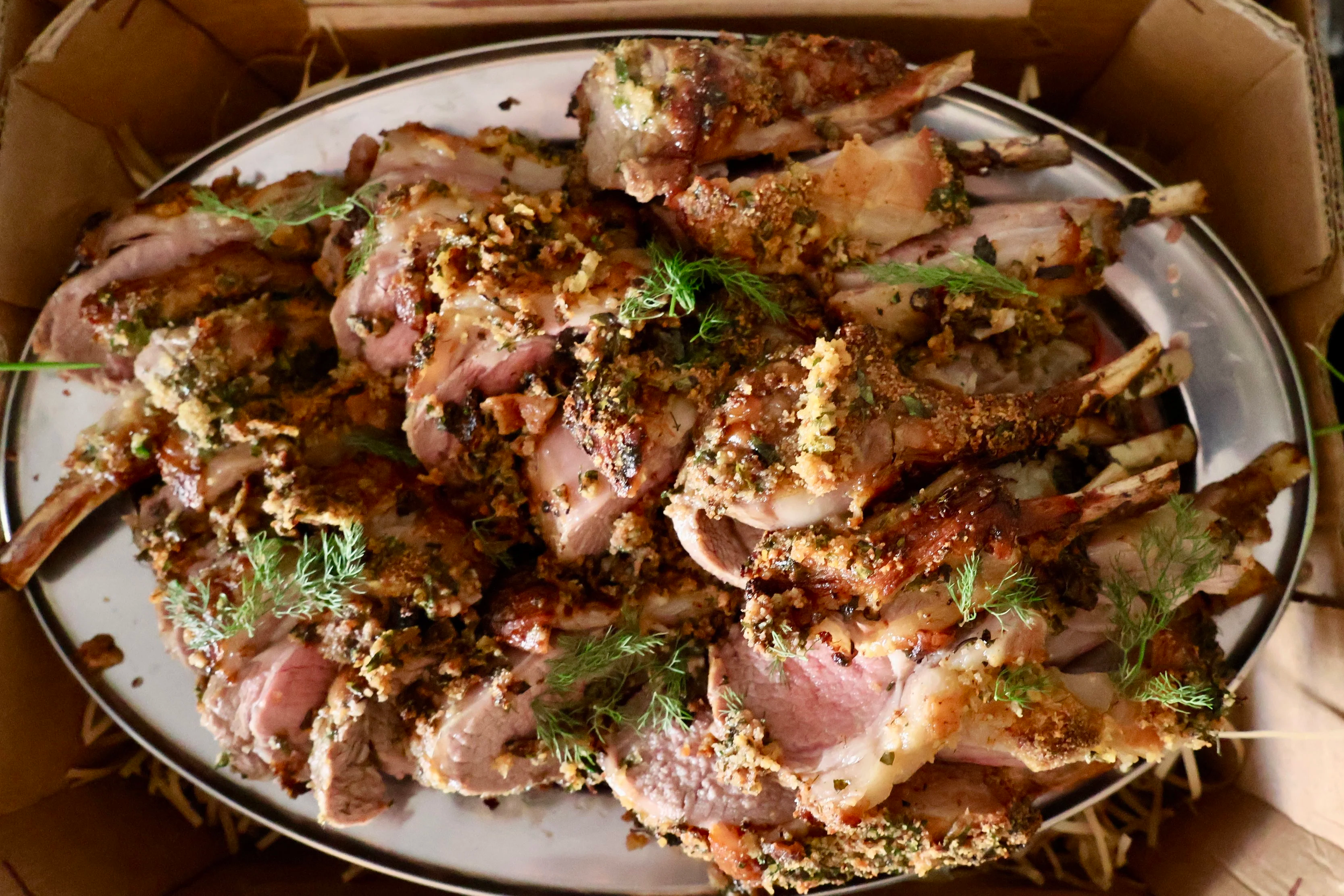
this is the lamb dish of your dreams.
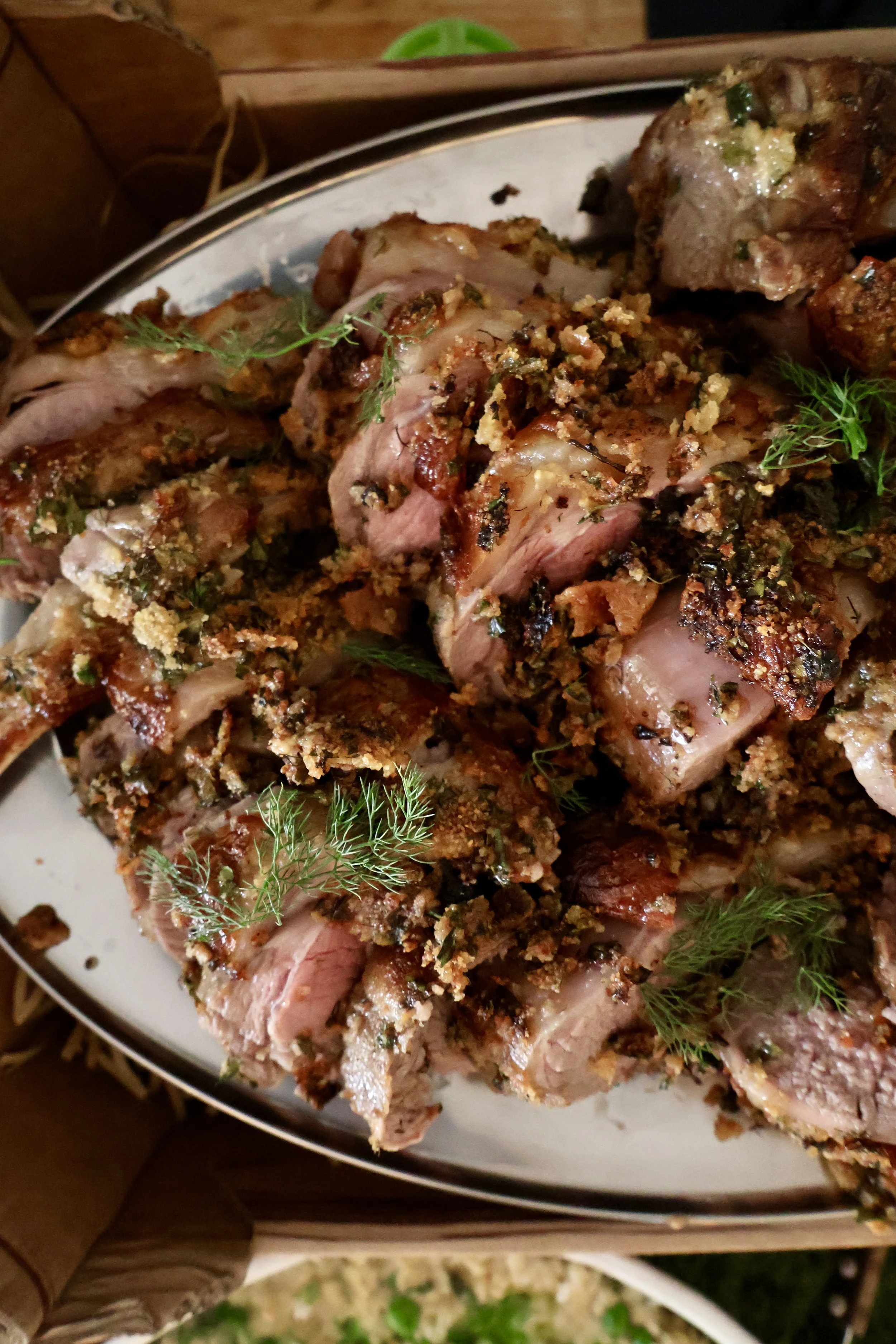
It looks like something you’d order at a beautiful restaurant, but it’s actually one of the smartest, most forgiving dinner party mains you can make at home. And I promise you, even the people that may usually not Like Lamb, will like This Lamb.
Why You’ll Love This Recipe
Deeply seasoned, juicy lamb thanks to an overnight dry brine
Golden, aromatic herb crust that feels elevated but not fussy
Perfect for hosting & make-ahead friendly —fast final cook, minimal stress
Balanced and springy with lemon, herbs, and just enough richness
The Flavor Logic
This dish is all about balance.
Fat: lamb + olive oil + a little cheese = richness
Acid: lemon zest + juice cuts through it
Salt: dry brine + cheese + mustard = layered seasoning
Aromatics: garlic, rosemary, dill, parsley = spring energy
The mustard doesn’t make it taste “mustardy”— it melts into the crust and acts as glue + adds depth.
Final taste test:
You want:
juicy, savory lamb
a bright, lemony, herby crust
no flatness
If it tastes slightly muted → add lemon zest + a pinch of flaky salt at the end
Timeline - at a glance
Yield: Serves 6
Active time: 45–60 minutes
Rest time (dry brine): 12–24 hours
Cook time: 15–20 minutes
Total time: ~24 hours (mostly passive)
Make-ahead friendly? Yes – ideal for dinner parties
Best served: Immediately after resting, warm and juicy
Schedule options:
Plan A (Same-day cooking):
Dry brine overnight → Sear + crust + roast before servingPlan B (Hosting mode):
Dry brine overnight → Sear earlier in the day → Refrigerate → Crust + roast right before serving
Key checkpoints:
Lamb surface is dry after brine (good for searing)
Crust is golden, not wet or pasty
Rested 10–15 minutes before slicing
Optional AKS Upgrades
Add mint to the crust for a more Greek spring profile
Mix finely ground pistachios into the crust for texture
Finish with good olive oil + flaky salt right before serving
Plate over a bed of pea purée or trahanoto for a complete-dish moment
Ingredients (4 Servings)
Lamb + Dry Brine
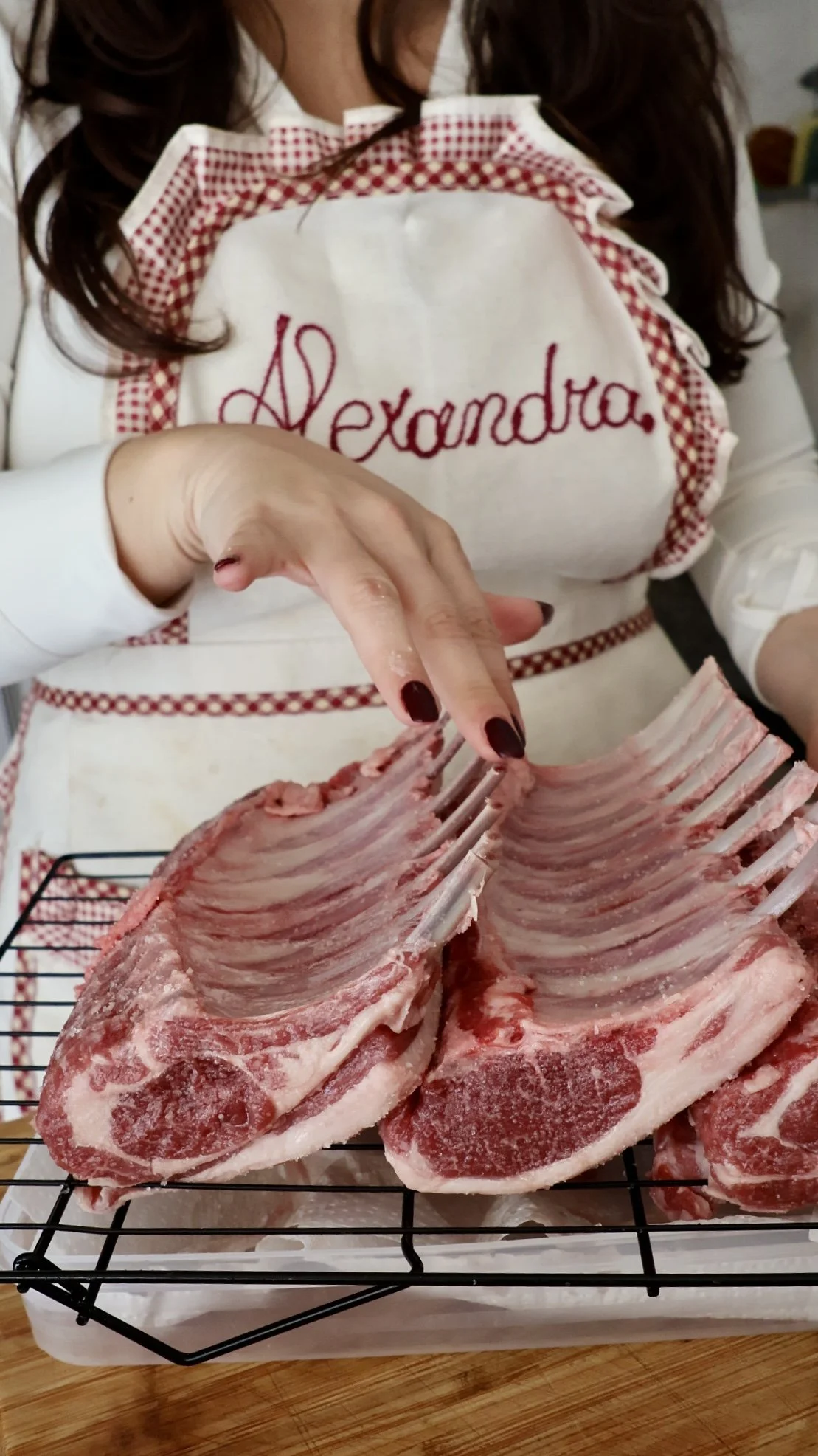
2 kg French-cut rack of lamb (about 2 racks)
25–30 g fine sea salt
1/2 tsp black pepper
1 tbsp olive oil
Mustard Coating
70 g Dijon mustard
20 g whole grain mustard
2 garlic cloves, finely grated
2 tsp lemon zest
1 tbsp lemon juice
1 tsp honey
1 tbsp olive oil
Herb Crust
120 g breadcrumbs (ideally from fresh bread not dry packaged)
25 g Gruyere, finely grated
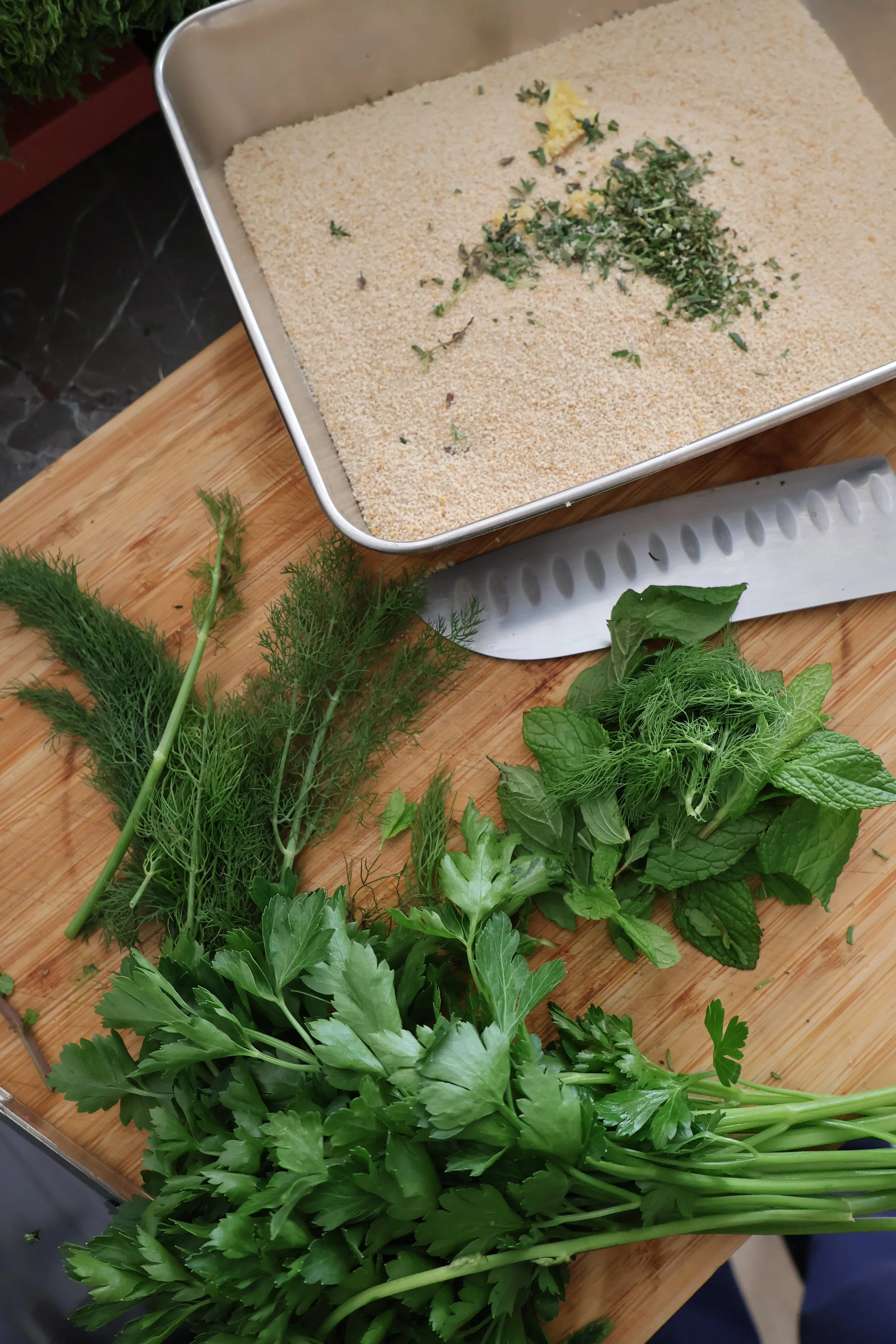
30 g of Spring Herbs (I used Parsley, Fennel Tops & Chives)
2 Twigs of rosemary
3-4 Twigs Thyme
1 small garlic clove
2 tsp lemon zest
35–40 ml olive oil
1/4 tsp salt
1/4 tsp black pepper
Equipment You’ll Need
Large pan (for searing)
Oven tray or oven-safe pan
Food processor (for crust) or sharp knife
Instant-read thermometer (highly recommended)
Tip: A thermometer removes all guesswork. Lamb goes from perfect → overdone quickly.
How to Make It
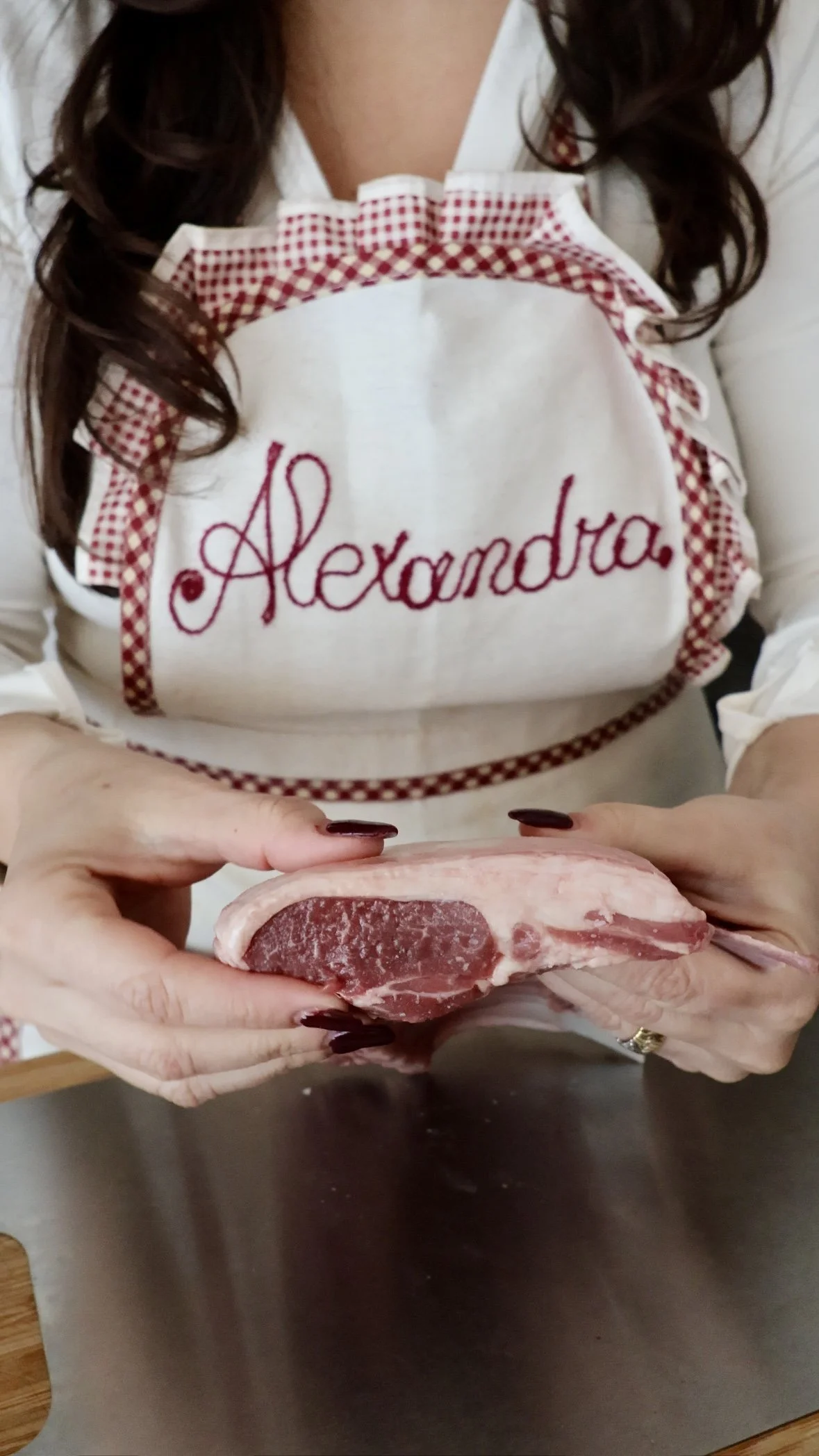
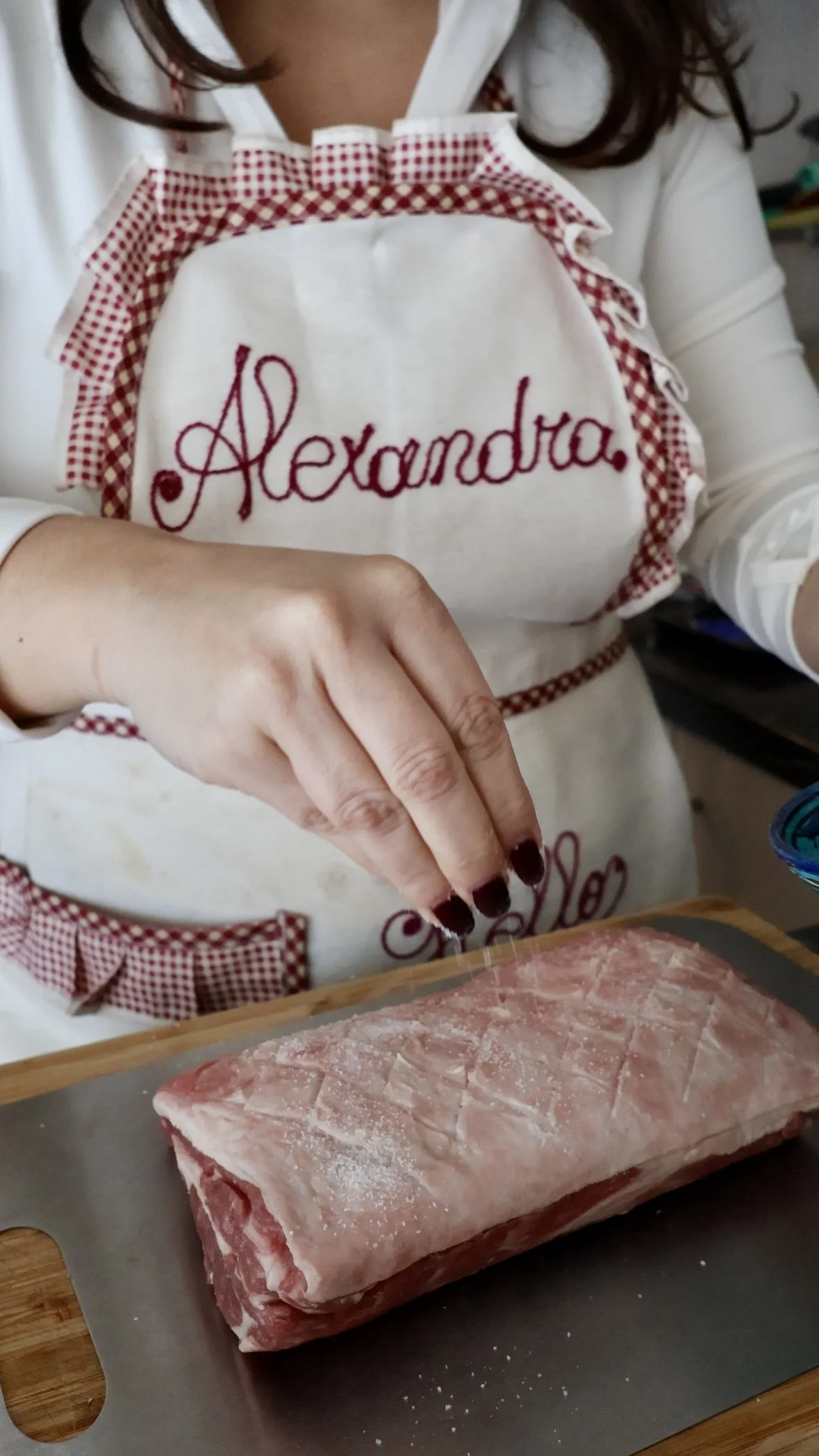
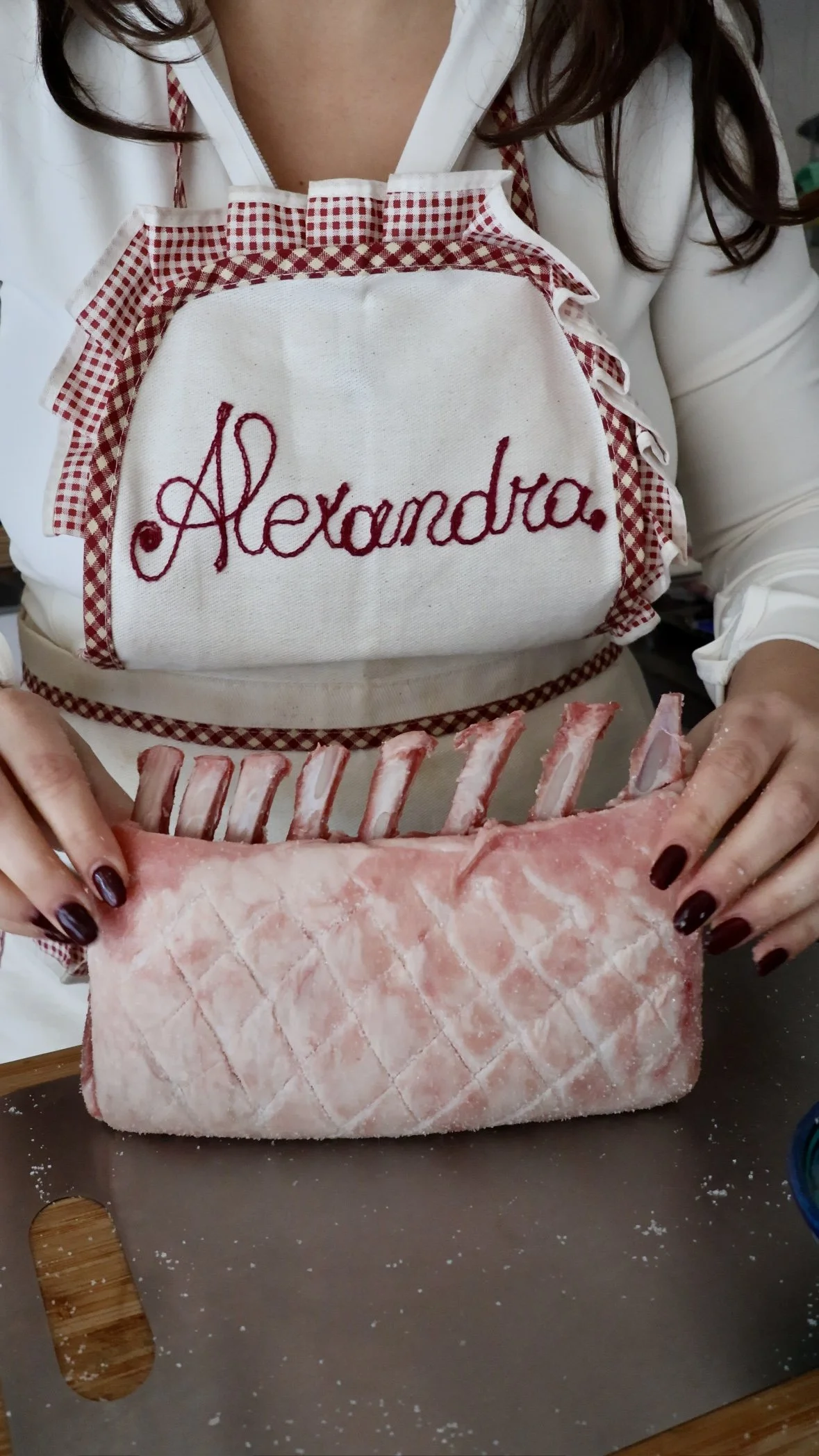
1) Dry Brine the Lamb (Day Before)
Season the lamb all over with the salt and place uncovered in the fridge for 12–24 hours.
Why it matters:
This seasons the meat deeply and dries the surface for better searing.
Look for: Slightly darker, dry-looking surface the next day
Common mistake: Uneven salt distribution
If it happens: Just pat and continue, in any case don’t rinse
2) Bring to Room Temp
Take the lamb out 30–45 minutes before cooking. Pat Dry from any juices released by the salt brine.
Season with black pepper only.
Why it matters:
Reduces temperature shock and promotes even cooking.
Look for: Lamb no longer fridge-cold to the touch
Common mistake: Cooking straight from fridge
If it happens: Expect longer cook time
3) Make the Mustard Coating
Mix all ingredients until smooth.
Why it matters:
Acts as both flavor base and glue for the crust.
Look for: Thick but spreadable consistency
Common mistake: Too thick/dry
Fix: Add a touch more olive oil
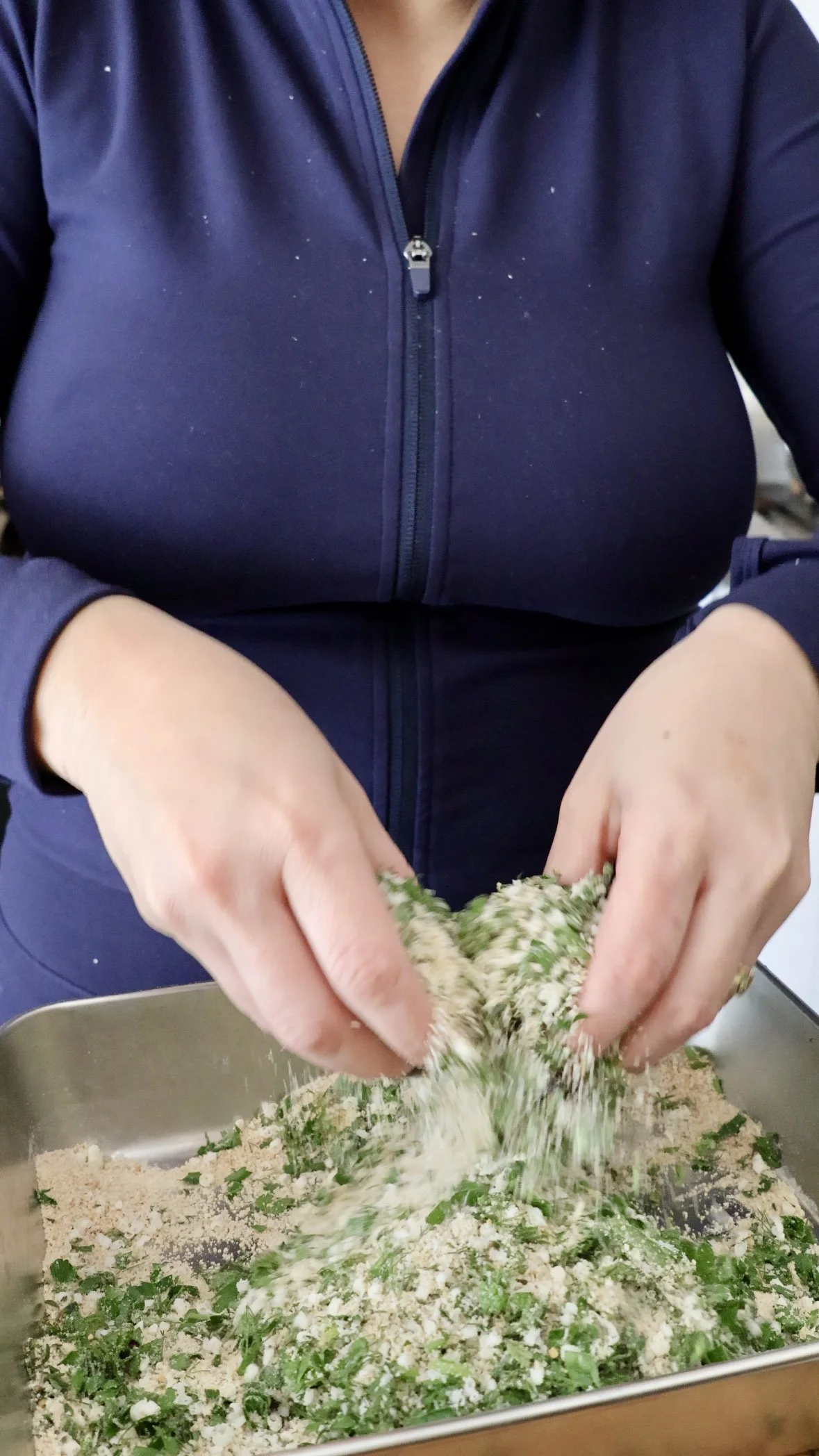
4) Make the Herb Crust
Pulse everything in a food processor until it looks like damp, green sand.
Why it matters:
Texture determines whether the crust sticks or falls off.
Look for: Holds when pressed, not a paste
Common mistake: Over-processing into a paste
Fix: Add breadcrumbs
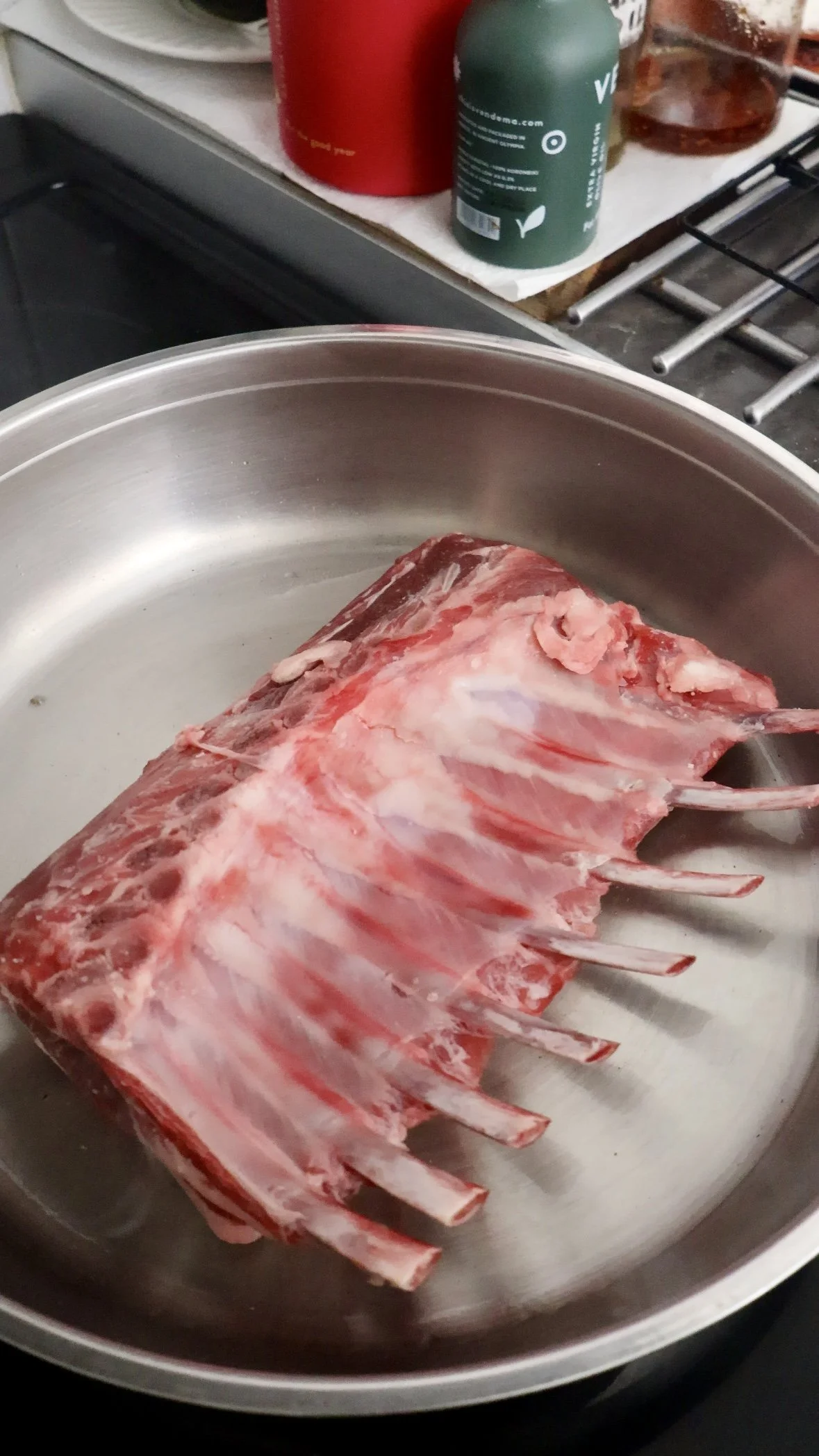
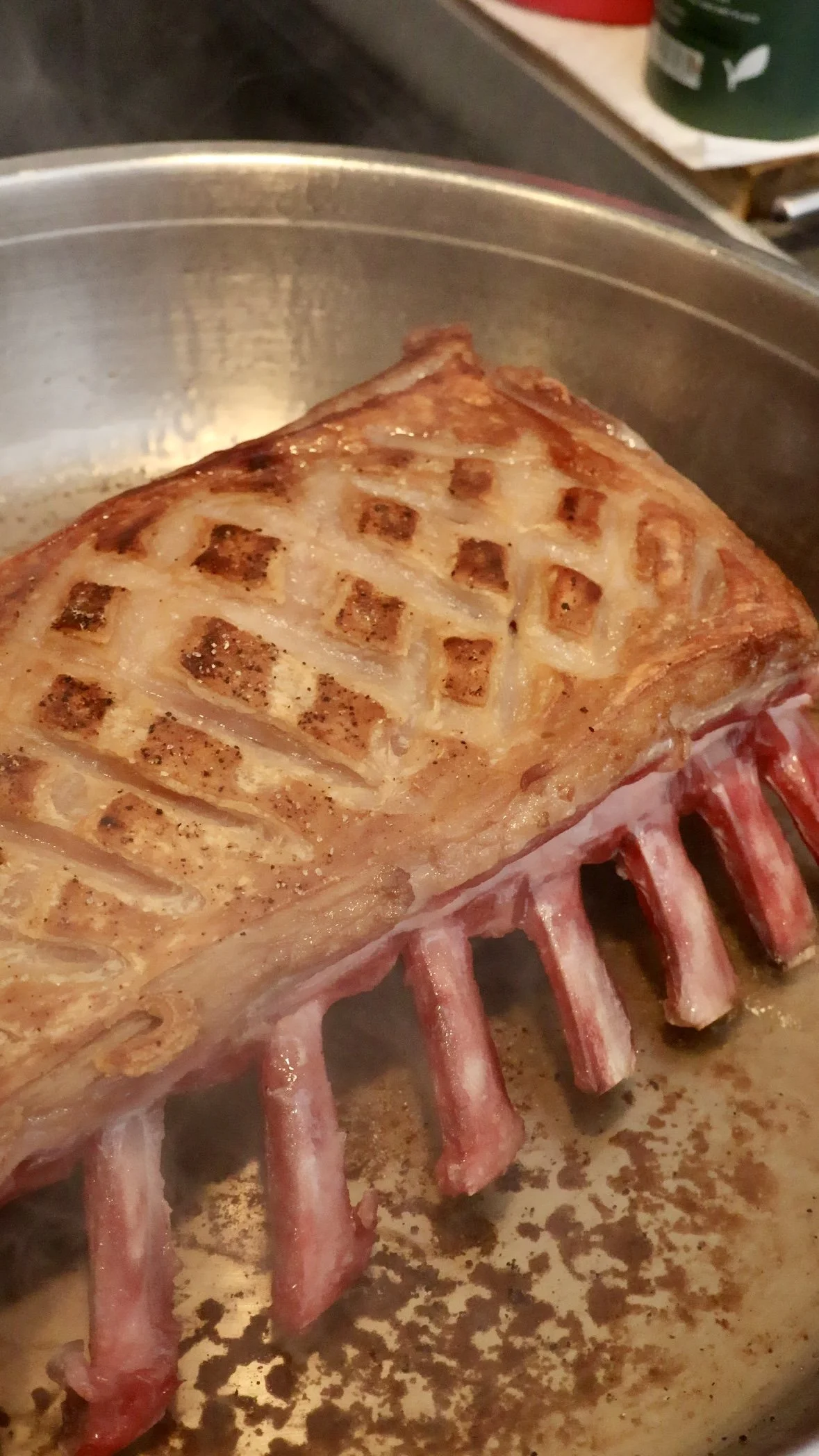
5) Sear the Lamb
Sear in hot oil:
2–3 min fat side
~1 min other sides
Why it matters:
Builds flavor and color before roasting.
Look for: Light golden crust, not dark brown/burned
Common mistake: Over-searing
If it happens: Lower heat next time
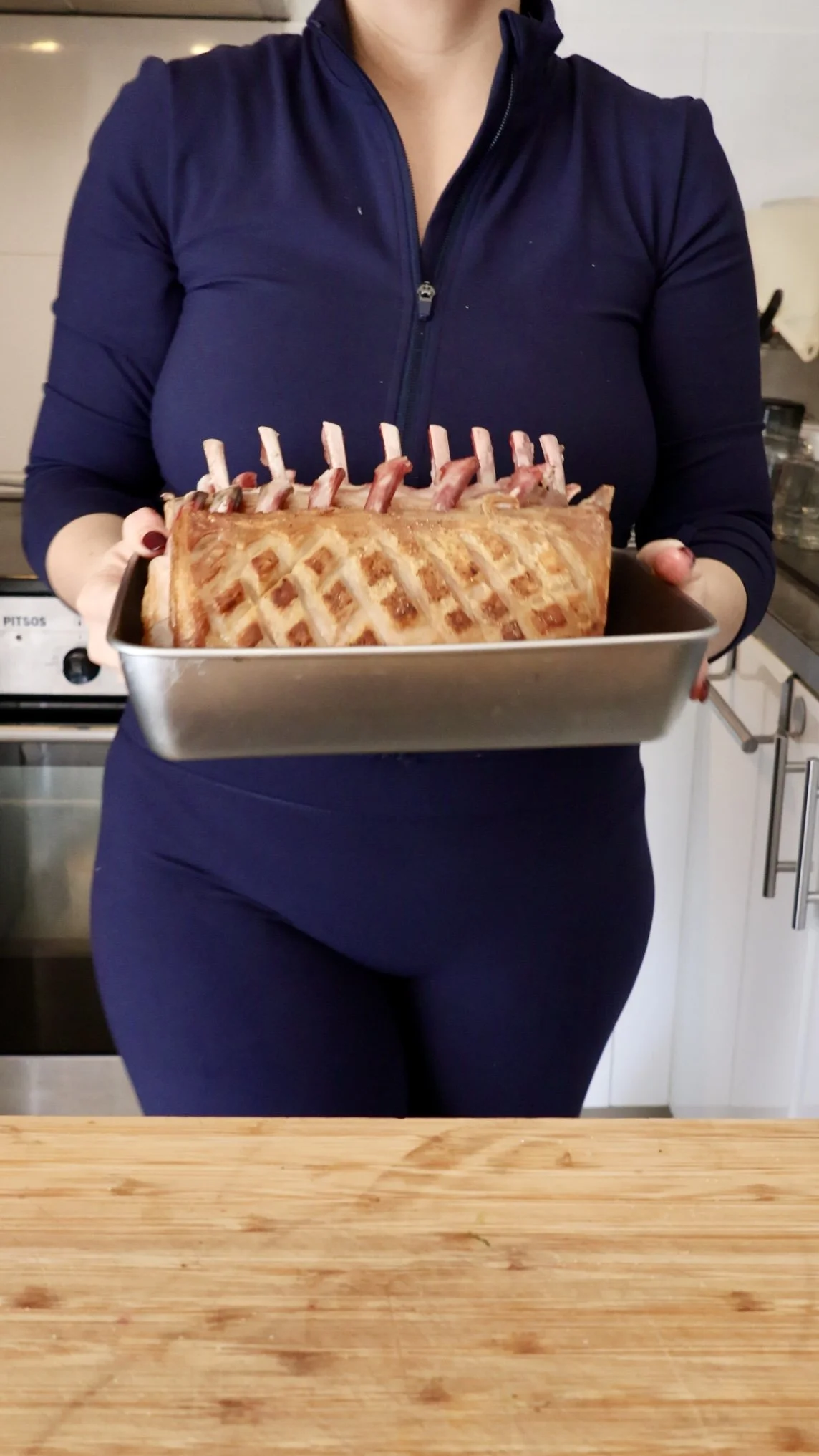
6) Cool (if prepping ahead)
In the case you want to sear your Lamb before guests arrive, make sure to Let lamb cool fully.
If you wont be cooking it for a few hours, place the seared lamb chops in the fridge till ready to coat & bake.
Why it matters:
Prevents overcooking and makes hosting easier.
Look for: No steam coming off
Common mistake: Wrapping warm meat
Fix: Always cool before refrigerating
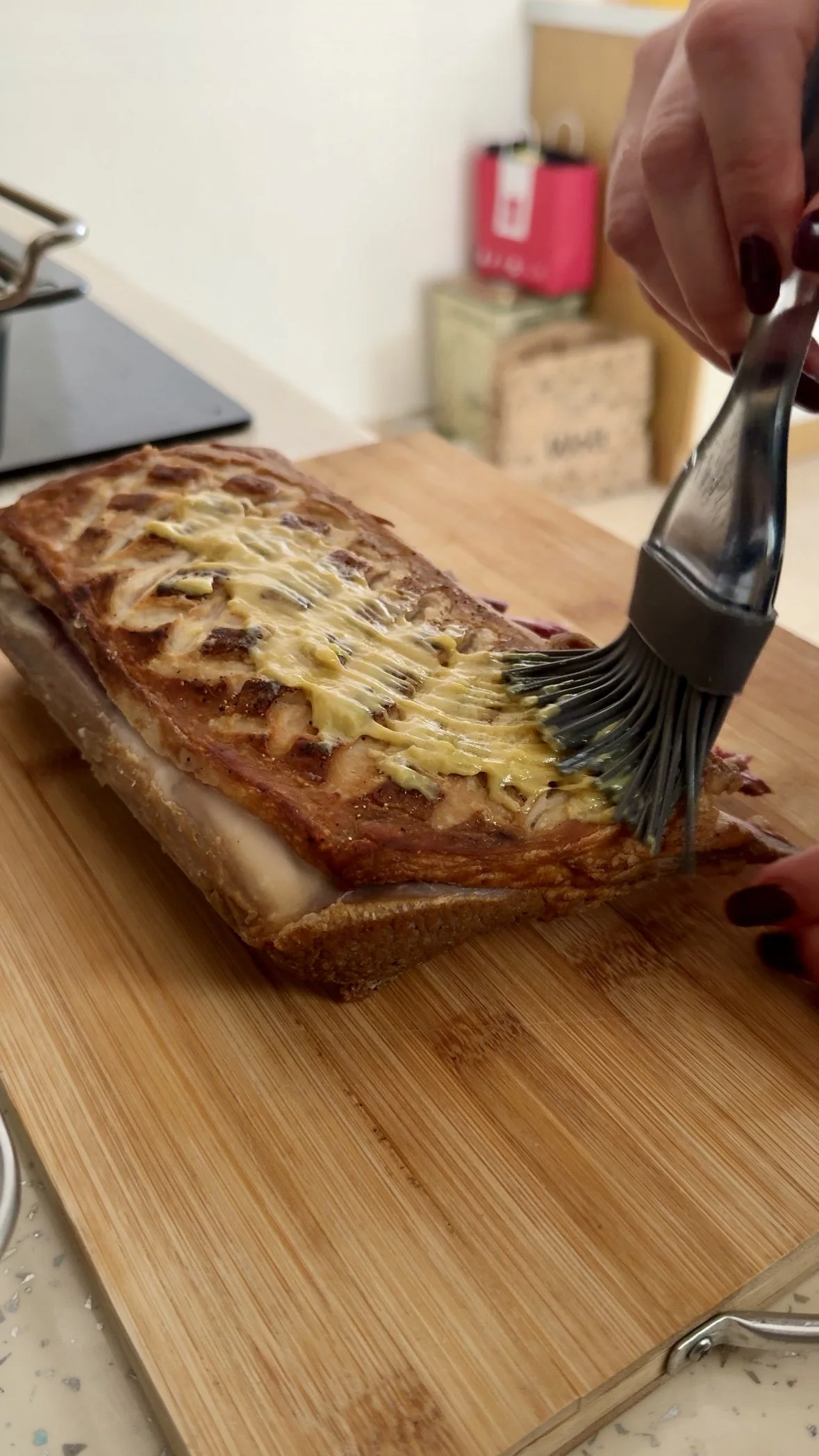
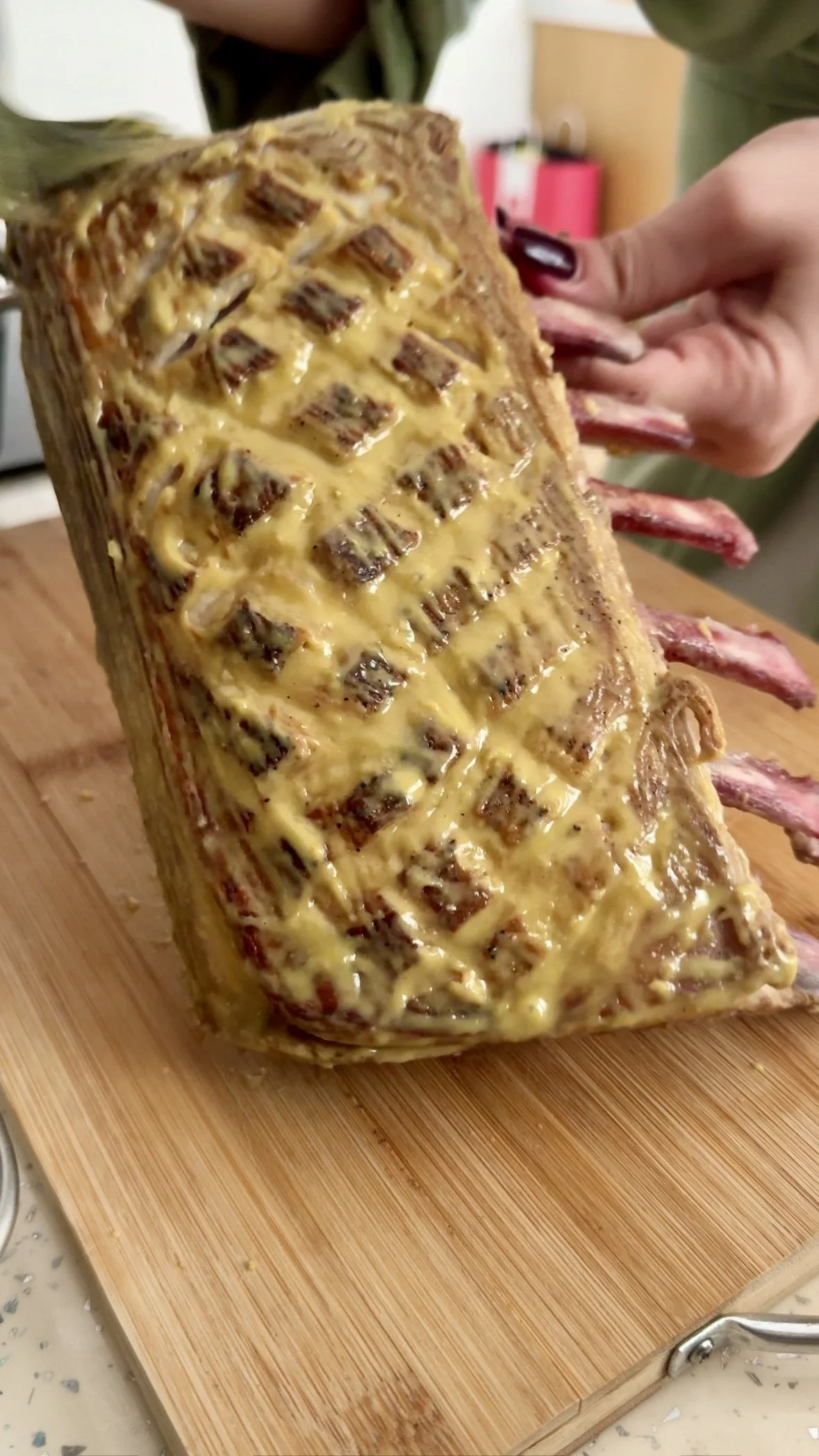
7) Mustard + Crust
Remove Lamb from the fridge and bring to room Temperature. Pre-heat your oven to 220°C fan.
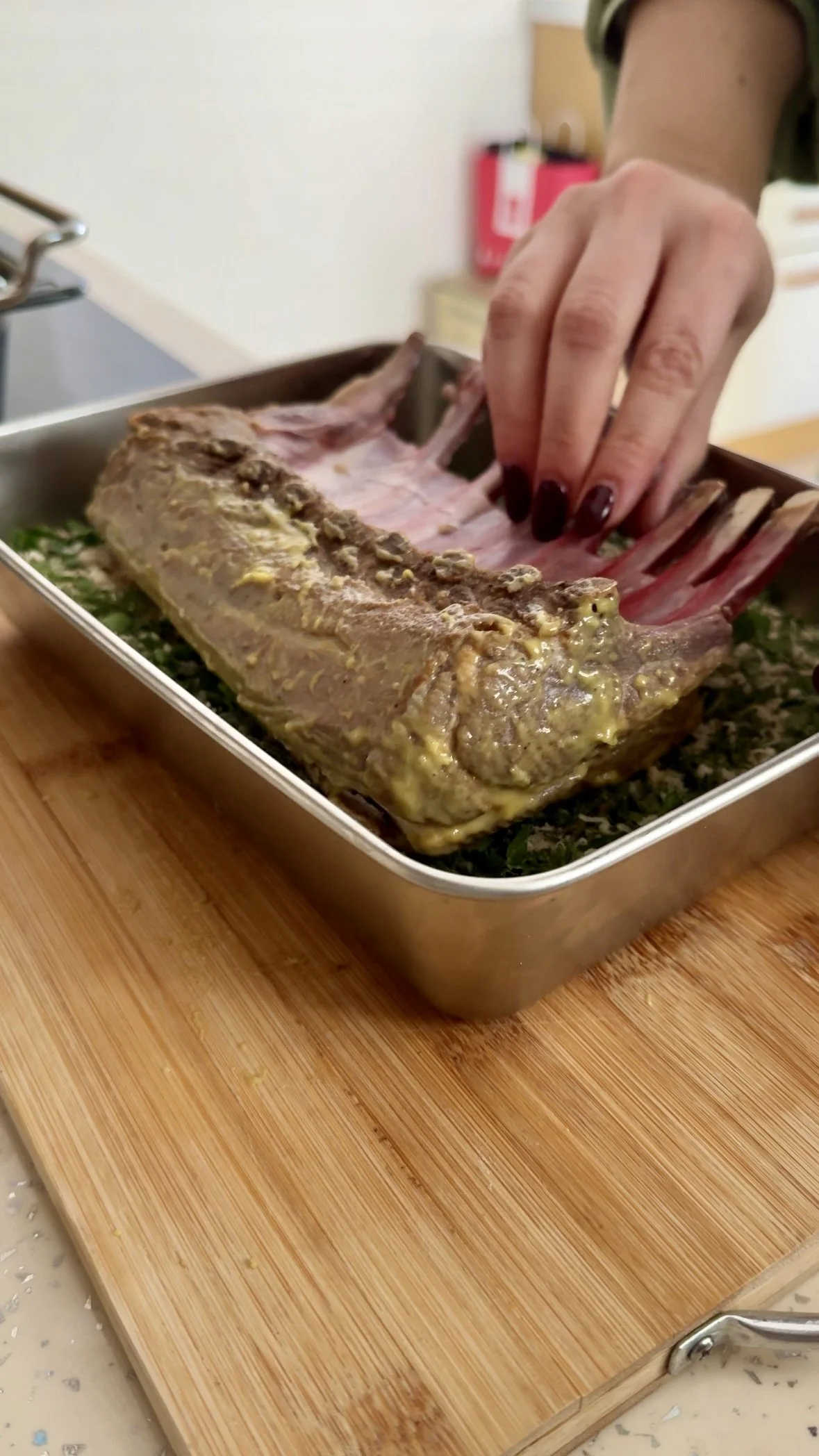
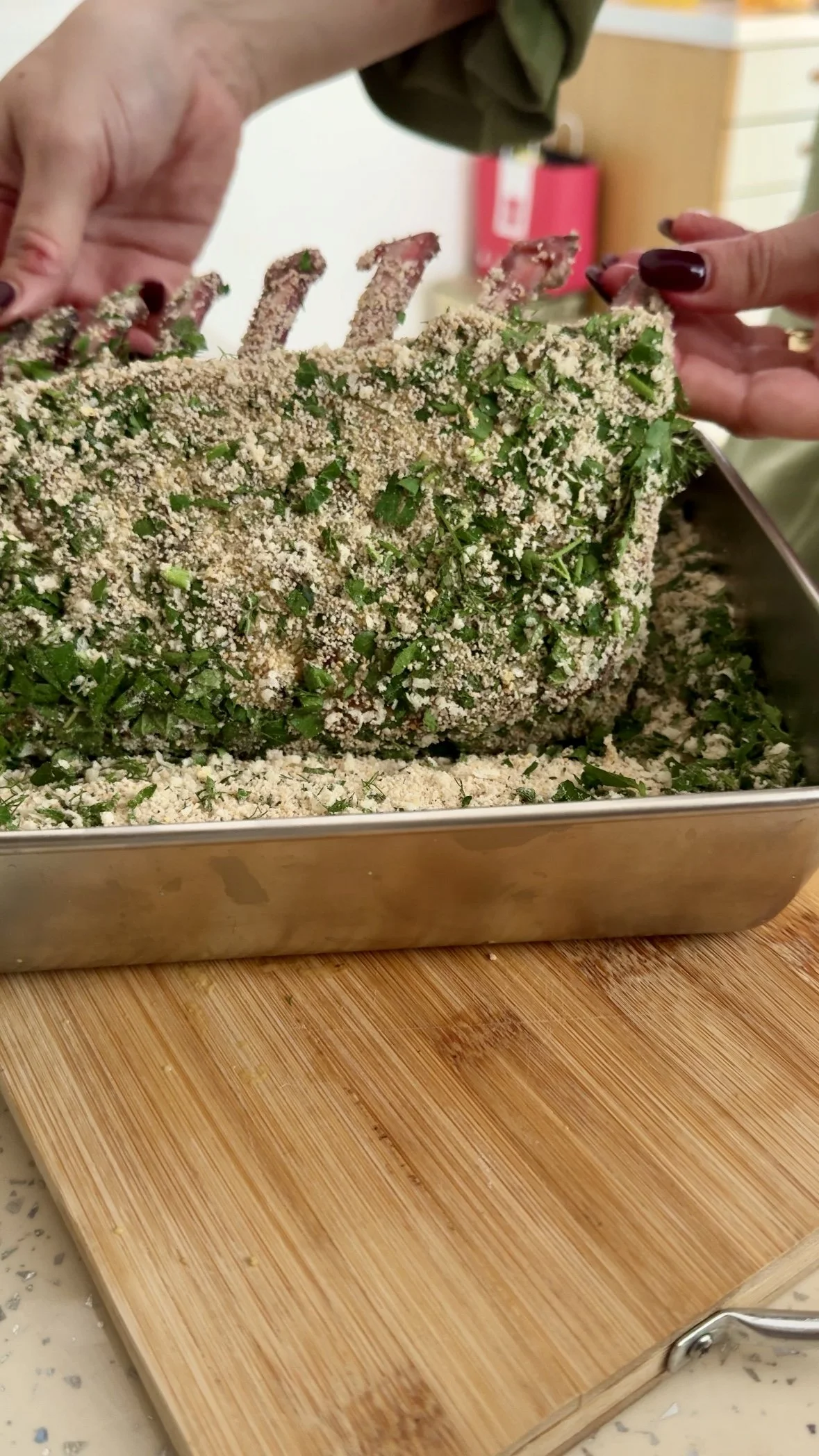
Right before roasting, coat your lamb chops generously with the mustard mix and press into a dish with your crust in order to coat.
Why it matters:
Keeps crust fresh and crisp.
Look for: Even layer, well-adhered
Common mistake: Crusting too early
If it happens: Texture may soften slightly
8) Roast
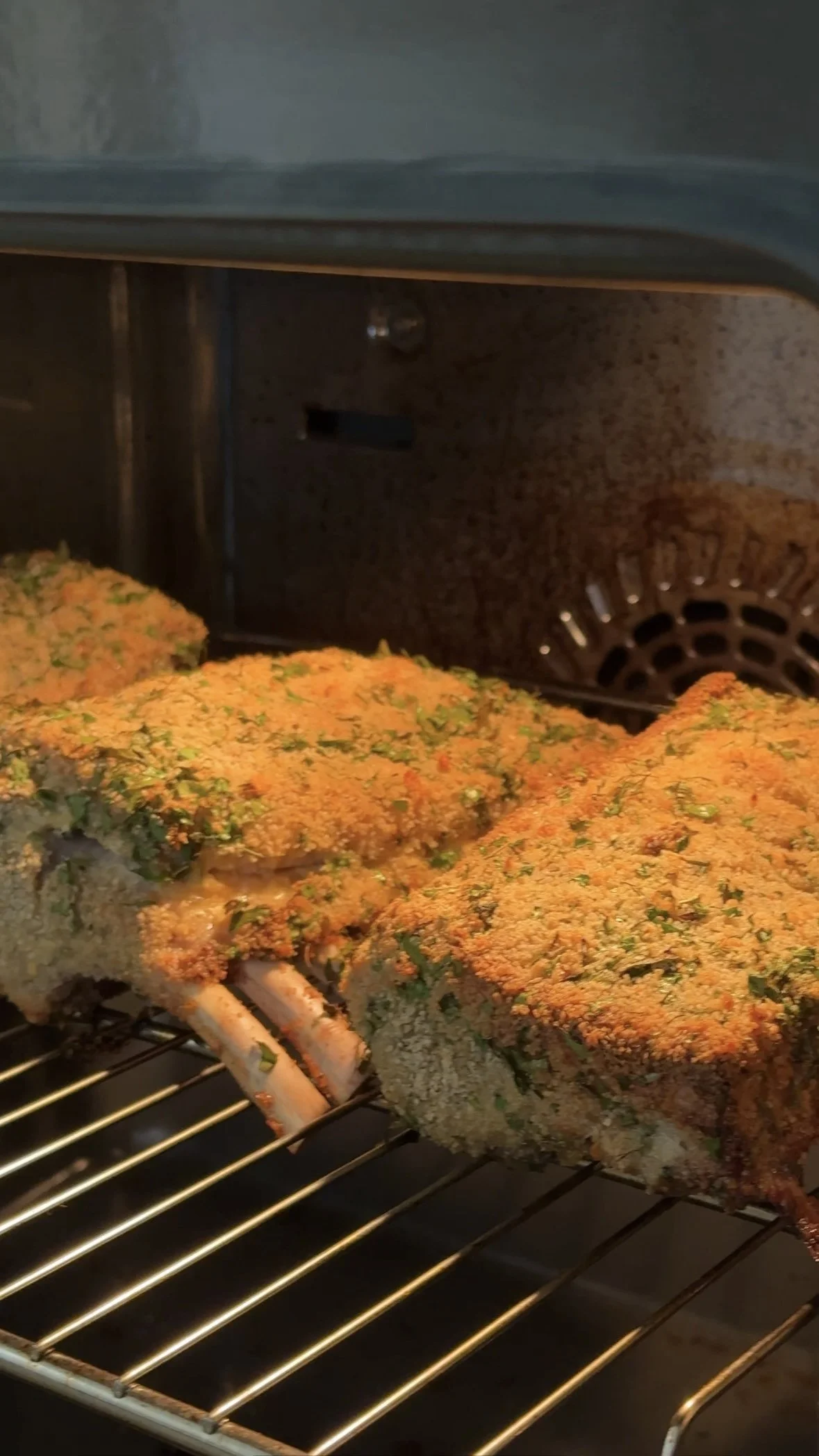
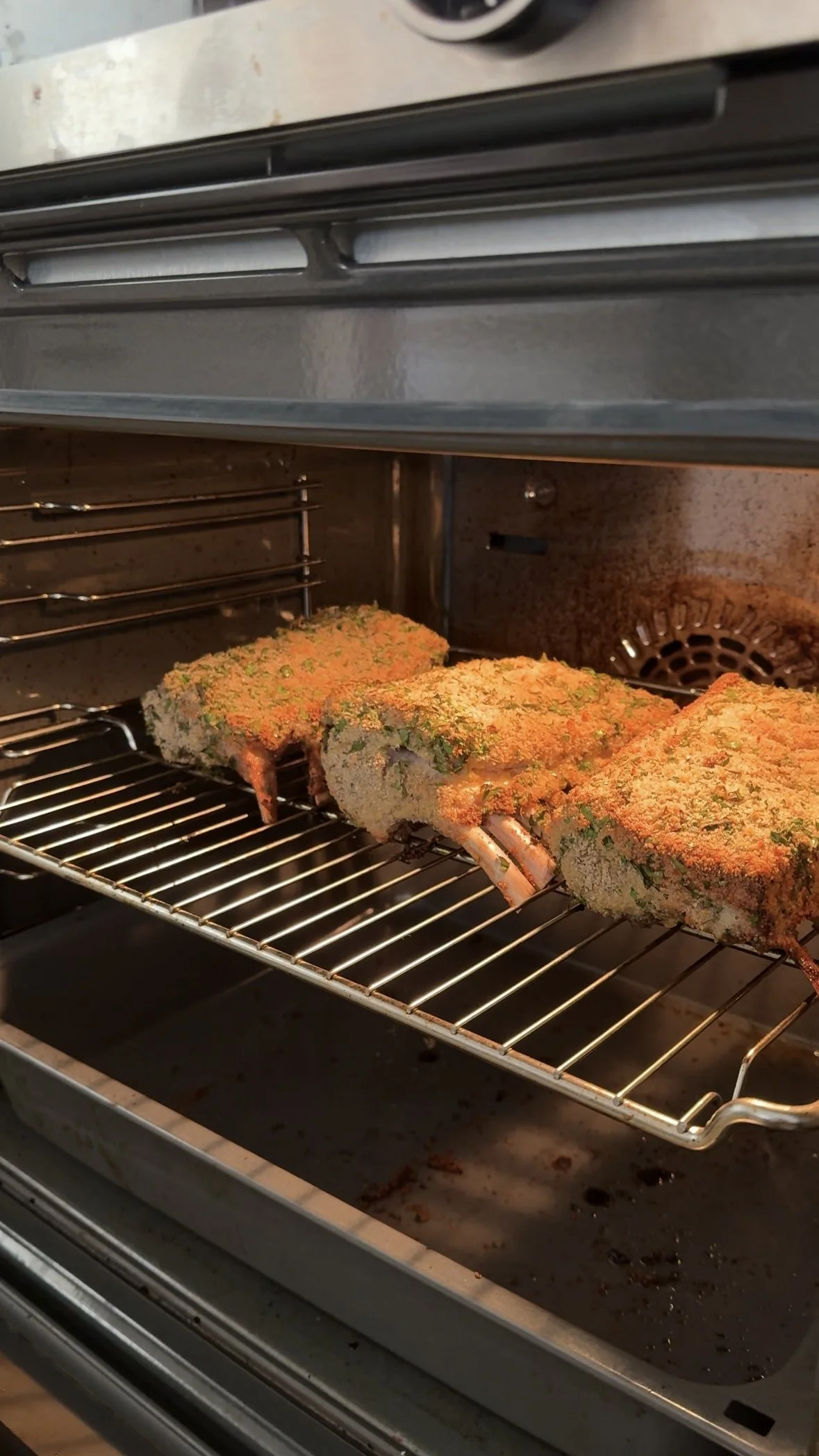
Place the crusted lamb in a preheated oven at 220°C fan (230°C conventional) and roast for 12–18 minutes, depending on the size of your racks and your desired doneness.
Why it matters:
Rack of lamb cooks quickly, so your doneness is controlled almost entirely by internal temperature—not time alone.
Use a thermometer for best results:
Pull temperature → final temperature after resting
Medium-rare:
Pull at 52–54°C → finishes at ~54–56°CMedium:
Pull at 55–57°C → finishes at ~57–60°CMedium-well:
Pull at 58–60°C → finishes at ~60–63°CWell done:
Pull at 63–65°C → finishes at ~65–68°C
The lamb will continue cooking as it rests, rising about 2–3°C, so always remove it from the oven slightly early.
Look for: A golden, aromatic crust and meat that feels springy when gently pressed
Common mistake: Waiting for the “perfect” temperature in the oven → this leads to overcooking
If it happens: Slice thinner and finish with olive oil + lemon to bring back moisture
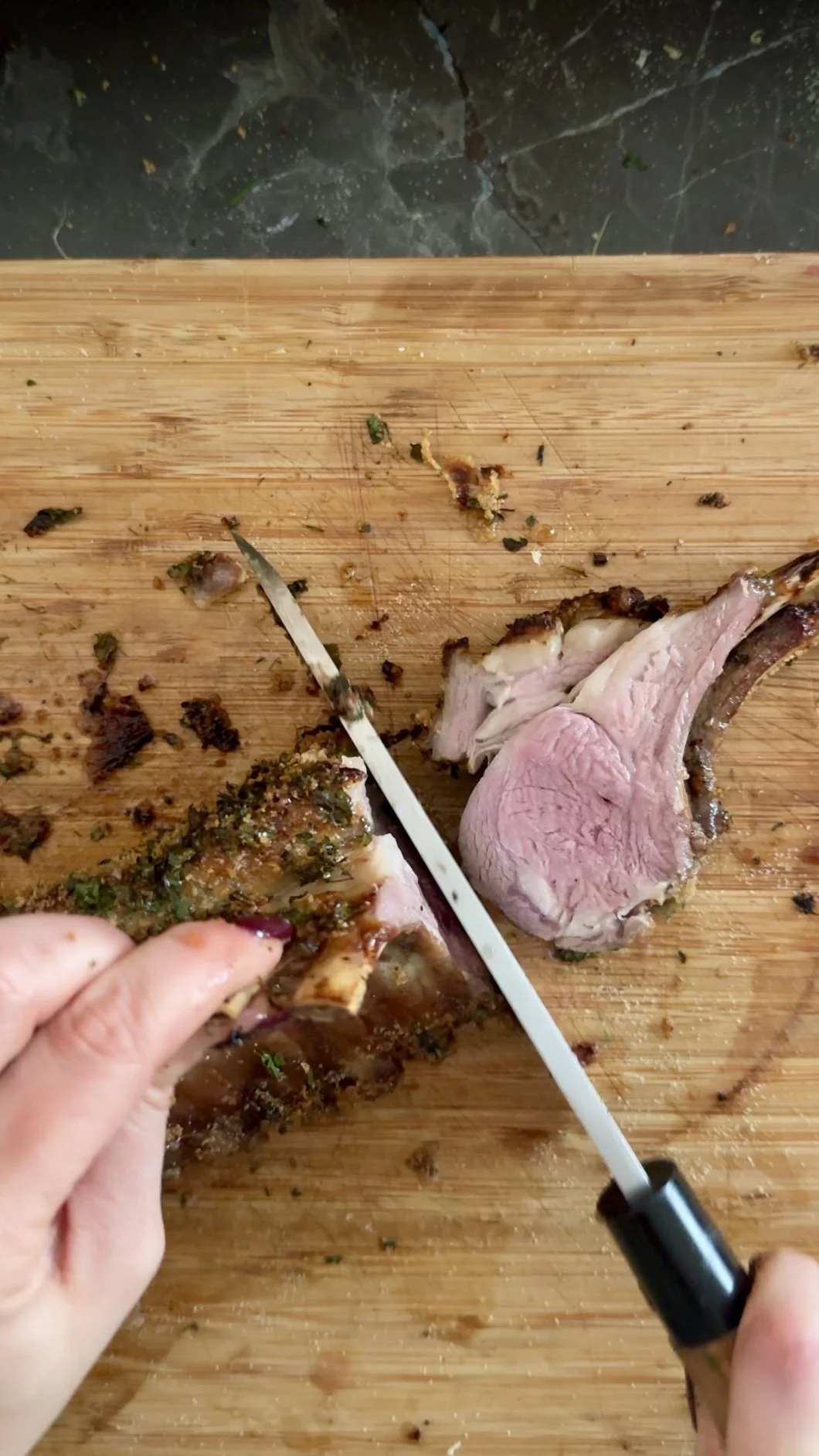
No thermometer? Here’s your visual guide:
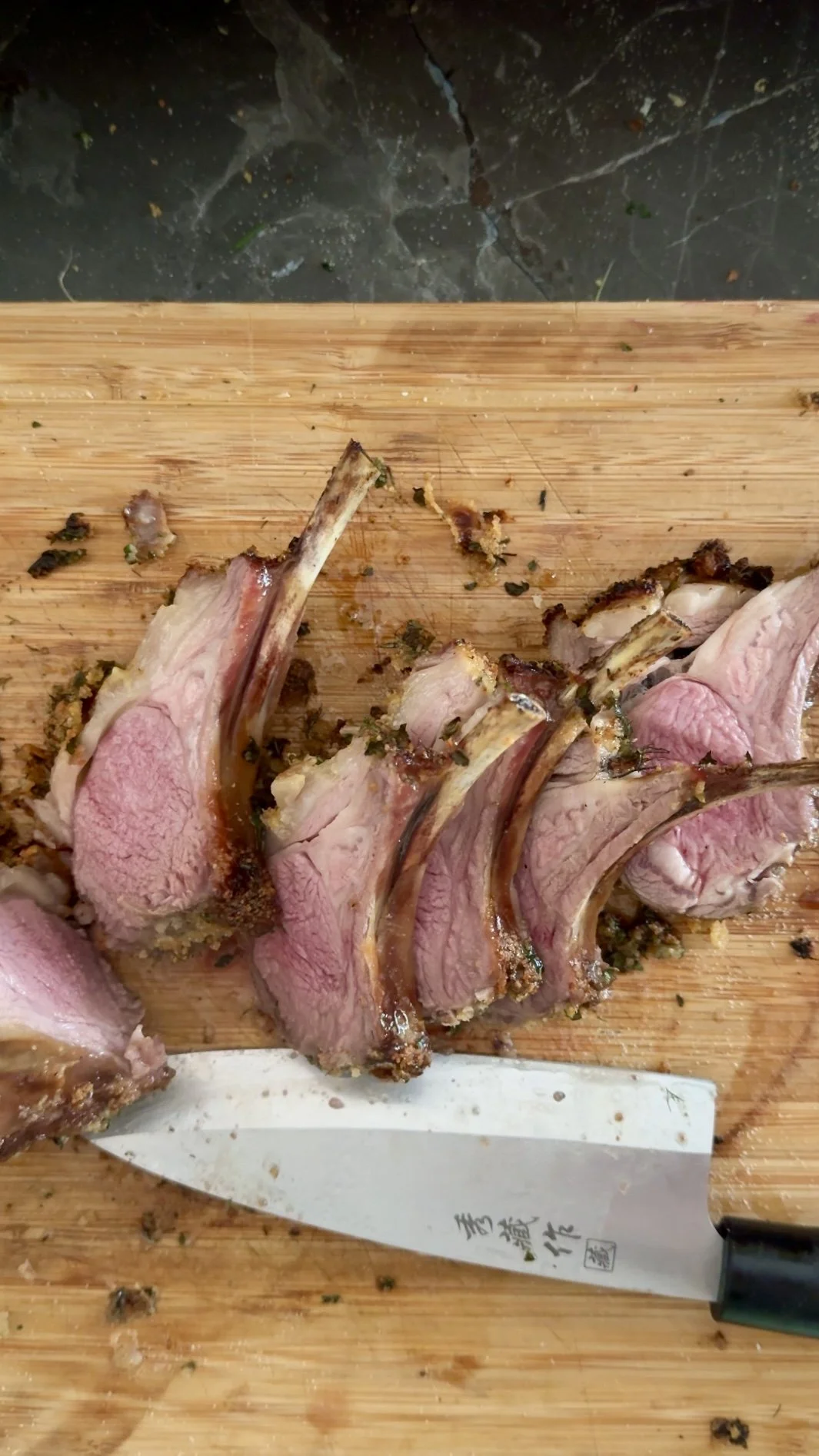
Medium: light pink center, still juicy
Medium-well: faint pink, firmer
Well done: no pink, fully firm
If your crust needs more color at the end, place it under the grill for 1–2 minutes, watching closely so it doesn’t burn.
9) Rest
Rest 10–15 minutes.
Why it matters:
Juices redistribute.
Look for: Juices reabsorbed, not running out
Common mistake: Cutting too early
Fix: Wait—it’s worth it
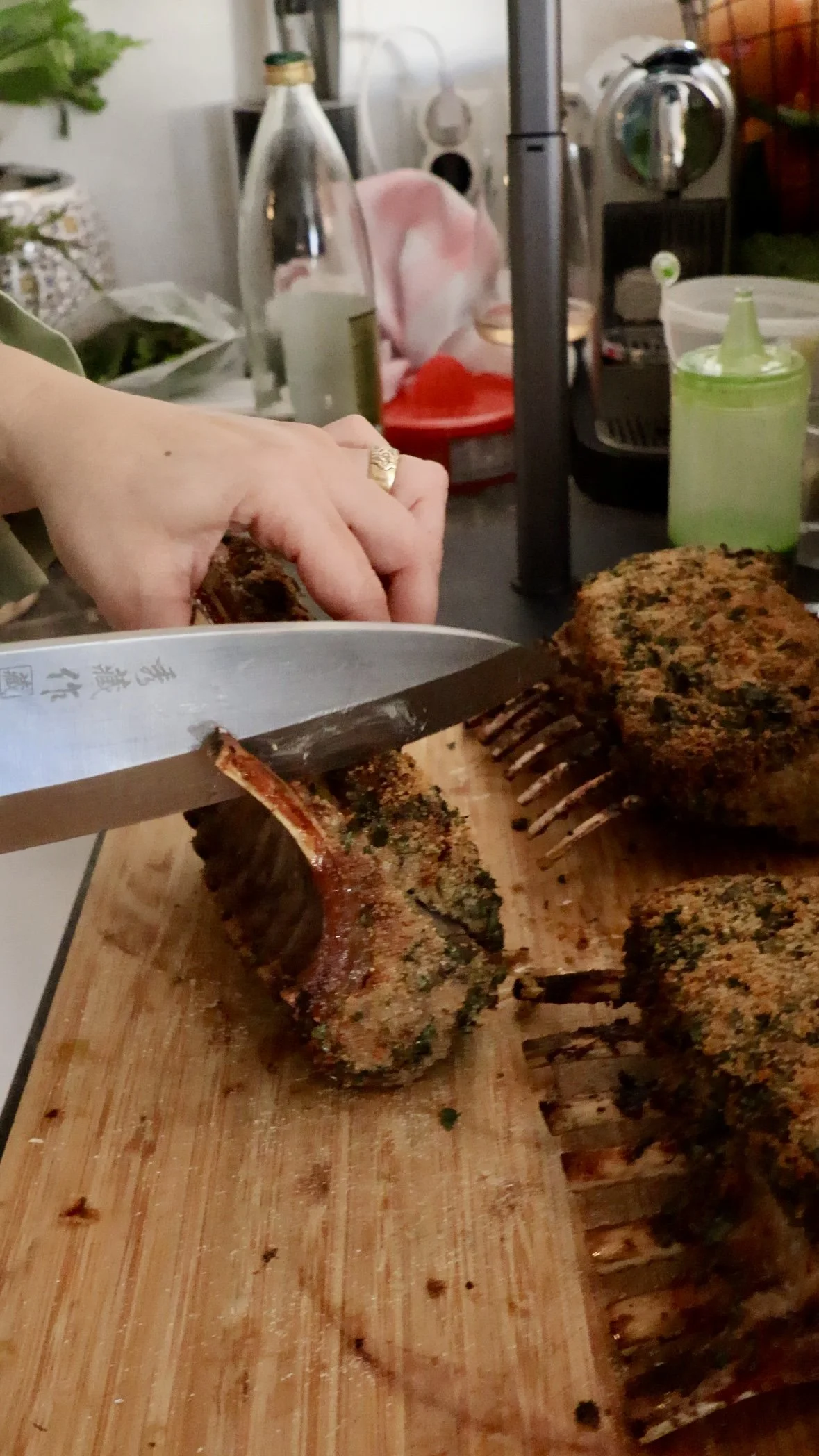
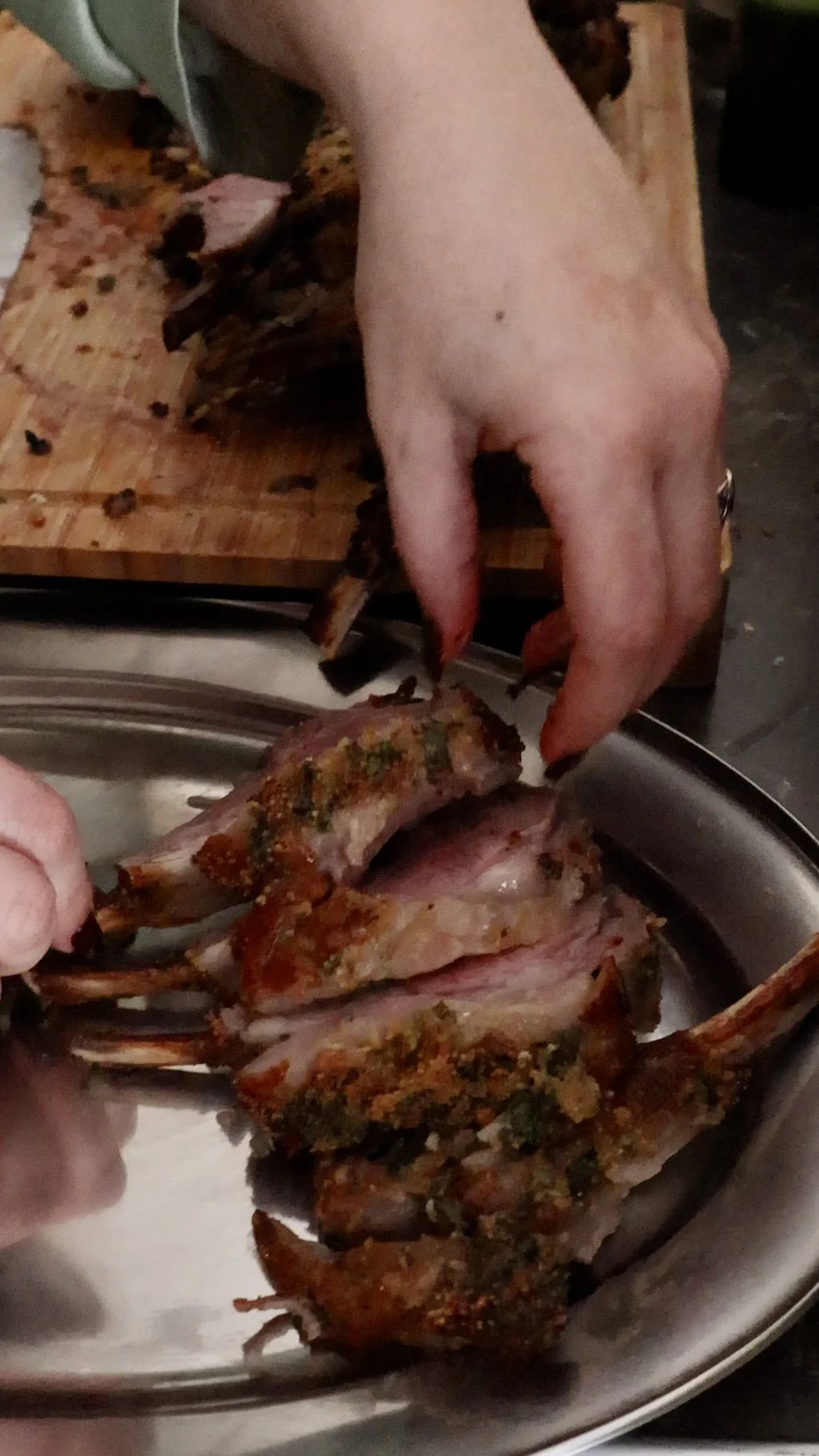
10) Slice + Finish
Slice between bones. Finish with lemon zest + olive oil.
Look for: Pink center, juicy texture
Common mistake: Skipping final seasoning
Fix: Always taste + adjust
Tips & Troubleshooting
-
Oven too high → use foil to Tent the top of your lamb → Lower rack next time
-
Not enough heat → Broil briefly → Preheat oven longer
-
Applied it too early and it sat/absorbed moisture → Crust lamb chops right before roasting next time
QUick Saves
Too rare? → Back in oven 3–5 min
Too done? → Slice + drizzle olive oil
Crust falling? → Press back gently after roasting
Looks dry? → Finish with lemon + oil
Substitutions & Variations
No Gruyere → Use pecorino or parmesan
Add oregano and mint for more Greek flavor
Add pistachios for texture
Use panko (less ideal, but works too)
Swap mustard types to taste
Add chili flakes for heat
Use lamb loin instead of rack (adjust cook time)
Storage
Fridge:
Up to 2 days, airtight
Reheat:
150°C oven, covered, 10 minutes
Make-ahead plan:
Day before: dry brine
Day-of: sear early
Before serving: crust + roast
Hosting Notes
T-24h:
Dry brine
Morning of:
Make crust + mustard
T-2h:
Sear lamb, cool & refrigerate
T-45m:
Bring to temp, Pre-heat Oven
T-30m:
Crust + roast
T-10m:
Rest
Serve:
Slice fresh, plate beautifully
Estimated Nutrition (per serving)
Calories: ~450
Protein: ~30g
Fat: ~32g
Carbs: ~6g
Estimate based on 6 servings from 2 kg lamb
AKS RECIPE CARD
Herb-Crusted Rack of Lamb with Lemon, Mustard & Spring Herbs
Dry-brined, seared, and roasted with a golden herb crust—juicy, elegant, dinner-party perfect.
Ingredients
Lamb + Dry Brine
- 2 kg rack of lamb (French-cut)
- 25–30 g fine sea salt
- 1/2 tsp black pepper
- 1 tbsp olive oil
Mustard Coating
- 70 g Dijon mustard
- 20 g whole grain mustard
- 2 garlic cloves (finely grated)
- 2 tsp lemon zest
- 1 tbsp lemon juice
- 1 tsp honey
- 1 tbsp olive oil
Herb Crust
- 120 g fresh breadcrumbs
- 25 g gruyere (finely grated)
- 35 g Herbs (I Use Parsley, Fennel Tops & Chives)
- 2-3 twigs each rosemary & thyme
- 1 garlic clove
- 2 tsp lemon zest
- 35–40 ml olive oil
- 1/4 tsp salt
- 1/4 tsp black pepper
Optional / To Serve
- Flaky salt
- Extra lemon zest
- Good olive oil
Method
- Dry brine: Salt lamb, refrigerate uncovered 12–24h (surface should look dry).
- Bring to temp: Remove 30–45 min before cooking; season with pepper only.
- Make coating: Mix mustard, garlic, lemon, honey, oil until smooth.
- Make crust: Pulse all ingredients to damp sand texture (not paste).
- Sear: 2–3 min fat side, 1 min others until lightly golden.
- Cool: Let lamb cool fully (refrigerate if prepping ahead).
- Coat + crust: Spread mustard, press crust evenly on top.
- Roast: 220°C fan, 12–18 min → pull at 52–54°C (medium-rare).
- Rest: 10–15 min (juices reabsorb, temp rises 2–3°C).
- Slice: Cut between bones, finish with lemon zest + olive oil.
Quick Troubleshooting
- Crust falling off: Surface too wet—pat dry, crust right before roasting.
- Lamb overcooked: Pulled too late—slice thin, add olive oil + lemon.
- Crust soggy: Applied too early—assemble just before baking.
- Uneven cooking: Meat too cold—bring to room temp first.
- Pale crust: Oven not hot—broil 1–2 min at end.
Storage
- Fridge: Up to 2 days, airtight container
- Best next-day use: Slice into salads or wraps
- Reheat: 150°C oven, covered (gentle, don’t overcook)
Estimated nutrition (per serving): ~450 kcal | 30g protein | 6g carbs | 32g fat (based on 6 servings from 2 kg lamb)
